
Vanishing your paintings is really important. I have only ever used one type of varnish and as it’s worked so well and I am pleased with the results I’ve never needed to change.
Why I use spray varnish..
My preference has always been spray varnishes. You can purchased liquid varnish which you pour onto your work and then brush across evenly. This has never been a method I wanted to try for a couple of reasons. I have heard other artists attempt this and for whatever reason (unsure as I haven’t done it myself as mentioned) but as they were spreading it across it actually made the paint transfer across with their brush strokes. Also, I really don’t like how sometimes you can see brush lines. This really distracts my attention away from the artwork. So for those reasons I just feel it isn’t the way for me. So sprays have always been my go to.
Tip
Take your photographs before you varnish! I have learnt this the hard way. This picture below is before I have varnished and the glare as you can see is already terrible. Now, I wasn’t worrying about this when taking this photo but when varnished and new bright light in certain angle the glare causes a right headache for taking photos. There has only been one case where I managed to photograph a painting after I had glossed it and it must have been a fluke as I have never been able to do it again.
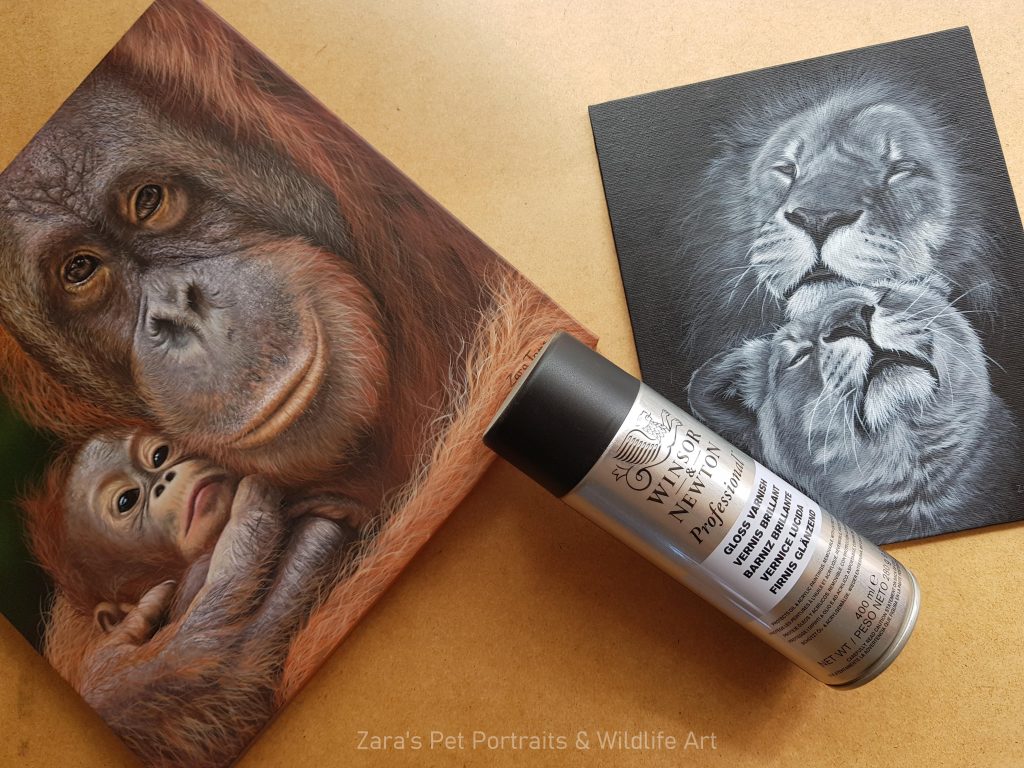
Lions ref: Terence Porter
Both originals for sale ‘Artwork for sale’
Gloss all the way for me..
The finish that you go for is entirely your choice. It’s all down to personal preference. I have always used a gloss varnish. For one reason.. It makes the colour and values of your piece return to how it looked when the paint was wet. It’s exactly the same concept if you have ever printed off an image on normal printer paper and then printed the same image on photo paper. Everything is that much more punchier.
The importance of varnishing..
This is the one thing you can do to best ensure your artwork stays in the best condition possible. Obviously once you sell it, how the client looks after is also plays a part but varnishing will preserve the paint and add that layer of protection. Some varnishes also offer additional UV protection but as with most things where you place it is vital. NEVER in direct sunlight or a room that has a varied range of temperatures like a conservatory. That would be the worst possible place for any artwork of any kind.
I only use lightfast colours in all my mediums I work in; and there are a few as you know. So this will make a huge difference in ensuring your artwork lasts and your client is buying a premium product, knowing the quality is the highest it could be.
Caution is needed..
Now, that all being said varnishes are not the nicest thing to be breathing in! So please take care when using them. The varnish smells strong and a room that is well ventilated is a must. I don’t have a garage so that isn’t an option for me. Ideally I would be doing it outside but that worries me. All it needs is a breeze and a bit of dust or debris lands on your varnished work. No thanks! So what I do is cover my dining room table with newspaper and I usually varnish against a large piece of MDF and leave the paintings there to dry. This is done the whole time with my patio doors wide open and all windows down stairs open. Trying to ventilate the area as much as I can.